Non-verbal communication encompasses a wide range of behaviors that convey messages without the use of words. This includes facial expressions, gestures, posture, and eye contact. The book emphasizes that non-verbal cues often communicate more than spoken words. For example, a person's crossed arms can indicate defensiveness or discomfort, while open arms may suggest openness and receptivity. Understanding these signals is crucial in both personal and professional interactions, as it allows individuals to interpret the true emotions and intentions behind spoken language. Recognizing these cues can enhance interpersonal relationships and improve communication effectiveness.
Continue readingThe context in which body language occurs is paramount to its interpretation. The book highlights that the same gesture can have different meanings depending on the situation, cultural background, and individual personality. For instance, a thumbs-up may signify approval in Western cultures but can be considered offensive in others. The authors stress the importance of considering the surrounding circumstances and the baseline behavior of individuals when interpreting body language. This understanding helps to avoid misunderstandings and misinterpretations, fostering clearer communication.
Continue readingEye contact is a powerful form of non-verbal communication that can convey a range of emotions, from confidence to aggression. The book discusses how maintaining appropriate eye contact can enhance trust and connection during conversations. Conversely, avoiding eye contact may signal discomfort or deceit. The authors provide insights into how different cultures perceive eye contact, emphasizing that what is considered respectful in one culture may be seen as confrontational in another. Mastering the art of eye contact can significantly improve one’s ability to connect with others and convey sincerity.
Continue readingMicro-expressions are brief, involuntary facial expressions that reveal true emotions before a person can mask them. The book explains how these fleeting expressions can provide critical insights into a person's feelings. By training oneself to recognize these micro-expressions, individuals can gain a deeper understanding of others’ emotional states, which can be particularly useful in negotiations, interviews, and conflict resolution. The authors offer techniques for observing and interpreting these subtle cues, advocating for increased emotional intelligence through the awareness of micro-expressions.
Continue readingPosture and body orientation play a significant role in conveying confidence and authority. The book details how an open, upright posture can enhance perceptions of competence, while slouched or closed postures may communicate insecurity or disinterest. The authors also discuss the importance of mirroring body language to create rapport and foster connection. By adopting similar postures and gestures, individuals can establish a sense of familiarity and trust, which can be beneficial in both personal and professional contexts.
Continue readingBody language is not universal; it varies significantly across cultures. The book explores various cultural norms and practices regarding non-verbal communication. For example, while personal space may be valued in some cultures, others may have a more communal approach to physical proximity. Understanding these cultural differences is essential for effective communication, particularly in a globalized world where interactions across cultures are common. The authors encourage readers to educate themselves on the body language norms of different cultures to enhance cross-cultural communication.
Continue readingThe book concludes with practical applications of body language insights in everyday life. The authors provide strategies for improving one’s own body language to convey confidence and credibility, as well as techniques for reading others to enhance social interactions. They discuss how these skills can be applied in various scenarios, such as job interviews, public speaking, and networking events. By mastering body language, individuals can improve their communication effectiveness and build stronger relationships, both personally and professionally.
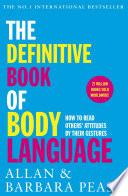
Continue readingThe reading time for The Definitive Book of Body Language depends on the reader's pace. However, this concise book summary covers the 7 key ideas from The Definitive Book of Body Language, allowing you to quickly understand the main concepts, insights, and practical applications in around 21 min.
The Definitive Book of Body Language is definitely worth reading. The book covers essential topics including Understanding Non-Verbal Communication, The Importance of Context, The Role of Eye Contact, providing practical insights and actionable advice. Whether you read the full book or our concise summary, The Definitive Book of Body Language delivers valuable knowledge that can help you improve your understanding and apply these concepts in your personal or professional life.
The Definitive Book of Body Language was written by Allan Pease, Barbara Pease.
If you enjoyed The Definitive Book of Body Language by Allan Pease, Barbara Pease and want to explore similar topics or deepen your understanding, we highly recommend these related book summaries:
These books cover related themes, complementary concepts, and will help you build upon the knowledge gained from The Definitive Book of Body Language. Each of these summaries provides concise insights that can further enhance your understanding and practical application of the ideas presented in The Definitive Book of Body Language.