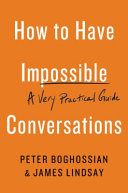
One of the foundational ideas in 'How to Have Impossible Conversations' is the importance of embracing curiosity rather than clinging to certainty. The authors argue that many conversations become contentious because individuals approach them with a mindset focused on winning the argument or proving their point. Instead, they advocate for a curious mindset that seeks to understand the other person's perspective. This approach not only fosters a more open dialogue but also encourages the exploration of different viewpoints. By asking questions and showing genuine interest in the other person's beliefs and experiences, you create a space where both parties can express themselves without the fear of judgment. This shift from a combative stance to one of curiosity can lead to more productive conversations, even with those who hold seemingly opposing views. The authors provide practical techniques for cultivating curiosity, such as active listening, reflective questioning, and the use of empathy to connect with others on a human level.
Continue readingAnother key idea presented in the book is the importance of focusing on shared values rather than getting bogged down in the specifics of facts and figures. The authors point out that many arguments stem from a clash of facts, which can lead to defensiveness and escalation. Instead, they suggest that conversations should pivot to the underlying values that inform those facts. For instance, if a disagreement arises over climate change, instead of debating statistics, participants could explore their shared values regarding the environment, future generations, or economic stability. By aligning the conversation around values, individuals can find common ground, which can lead to more collaborative problem-solving. This approach not only diffuses tension but also allows for a more meaningful exchange of ideas, as participants feel heard and understood. The authors provide examples of how to identify and articulate values, making it easier for readers to apply this concept in their own conversations.
Continue readingThe book introduces the 'Five Levels of Conversation,' a framework that categorizes conversations based on their depth and engagement. The levels range from small talk to deep, meaningful exchanges. The authors emphasize that many difficult conversations get stuck at the surface level, where participants merely exchange pleasantries or facts without delving into the underlying issues. To have more impactful conversations, individuals should strive to move through the levels, gradually increasing the depth of their dialogue. This involves asking open-ended questions, sharing personal experiences, and being vulnerable. By progressing through these levels, individuals can foster a more profound connection and understanding, which is especially crucial in conversations that seem impossible. The authors provide strategies for navigating these levels, making it easier for readers to recognize where they are in a conversation and how to advance it.
Continue readingEmotions play a significant role in conversations, particularly in those that are challenging or contentious. The authors highlight the necessity of managing one's emotions and maintaining composure during difficult discussions. They explain that when individuals become emotionally charged, their ability to think clearly and communicate effectively diminishes. Therefore, it's essential to develop techniques for self-regulation, such as taking deep breaths, pausing before responding, or even taking a break if needed. Additionally, the authors encourage readers to be aware of the emotional state of the other person and to respond with empathy. By acknowledging emotions and addressing them constructively, participants can create a more supportive environment for dialogue. This focus on emotional intelligence is crucial for facilitating understanding and reducing defensive reactions, ultimately leading to more productive conversations.
Continue readingActive listening is a critical skill emphasized throughout the book. The authors argue that many conversations fail because individuals are more focused on formulating their responses than truly listening to what the other person is saying. Active listening involves fully concentrating on the speaker, understanding their message, and responding thoughtfully. The authors provide practical tips for enhancing active listening skills, such as summarizing what the other person has said, asking clarifying questions, and avoiding interruptions. By practicing active listening, individuals can demonstrate respect and validation for the other person's perspective, which can significantly improve the quality of the conversation. This practice not only fosters a deeper understanding but also encourages reciprocity, as individuals are more likely to listen actively in return.
Continue readingThe book encourages readers to reframe the concept of conflict as an opportunity for collaboration rather than a battle to be won. The authors argue that many people view difficult conversations as confrontational, leading to a win-lose mentality. Instead, they suggest that individuals should approach disagreements with the mindset of finding solutions together. This involves recognizing that differing opinions can lead to better outcomes when combined creatively. The authors provide examples of how reframing conflict can lead to innovative solutions and stronger relationships. By shifting the focus from opposition to collaboration, participants can cultivate a more positive atmosphere where ideas can be shared freely and solutions can be co-created.
Continue readingThe final key idea in the book revolves around the power of storytelling in conversations. The authors highlight that stories can be a powerful tool for conveying complex ideas and emotions in a relatable way. When individuals share personal stories, they humanize their perspectives and create emotional connections with others. This can be particularly effective in bridging divides and fostering empathy. The authors encourage readers to incorporate storytelling into their conversations, whether to illustrate a point, share a value, or demonstrate vulnerability. By doing so, individuals can create a more engaging and impactful dialogue that resonates with their audience. The book provides guidance on how to craft and deliver stories effectively, making it easier for readers to utilize this technique in their conversations.
Continue readingThe reading time for How to Have Impossible Conversations depends on the reader's pace. However, this concise book summary covers the 7 key ideas from How to Have Impossible Conversations, allowing you to quickly understand the main concepts, insights, and practical applications in around 23 min.
How to Have Impossible Conversations is definitely worth reading. The book covers essential topics including Embrace Curiosity Over Certainty, Focus on Values, Not Facts, Use the 'Five Levels of Conversation', providing practical insights and actionable advice. Whether you read the full book or our concise summary, How to Have Impossible Conversations delivers valuable knowledge that can help you improve your understanding and apply these concepts in your personal or professional life.
How to Have Impossible Conversations was written by James A. Lindsay, Peter Gregory Boghossian.
If you enjoyed How to Have Impossible Conversations by James A. Lindsay, Peter Gregory Boghossian and want to explore similar topics or deepen your understanding, we highly recommend these related book summaries:
These books cover related themes, complementary concepts, and will help you build upon the knowledge gained from How to Have Impossible Conversations. Each of these summaries provides concise insights that can further enhance your understanding and practical application of the ideas presented in How to Have Impossible Conversations.