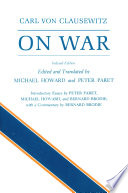
Carl von Clausewitz, the author of 'On War', posits that war is an extension of politics by other means. He emphasizes the inherent chaos and unpredictability of war, suggesting that it is not merely a series of battles but a complex interplay of numerous factors, including political, social, and economic elements. The nature of war is such that it cannot be fully controlled or predicted, highlighting the need for adaptability and foresight in military strategy. Clausewitz argues that understanding the nature of war is crucial for any military leader, as it informs their decisions and actions in the field.
Continue readingClausewitz introduces the concept of the 'remarkable trinity' which consists of three elements: passion (the people), chance (the army), and reason (the government). This trinity illustrates the dynamic relationship between these components and how they influence the conduct of war. The emotional engagement of the populace, the unpredictable nature of military operations, and the rational decisions made by political leaders all interact to shape the outcome of conflicts. Understanding this trinity allows military strategists to better navigate the complexities of warfare and to devise more effective strategies.
Continue readingClausewitz discusses the concepts of 'fog' and 'friction' as critical elements in warfare. The 'fog of war' refers to the uncertainty and confusion that can obscure a commander’s understanding of the battlefield, making it difficult to make informed decisions. 'Friction' represents the myriad of small issues that can arise during military operations, which can disrupt plans and lead to unexpected challenges. These concepts underscore the importance of flexibility and adaptability in military strategy, as leaders must be prepared to respond to unforeseen circumstances and maintain clarity amidst chaos.
Continue readingClausewitz famously states that war is a continuation of politics by other means, emphasizing that military action is deeply intertwined with political objectives. This idea stresses the importance of aligning military strategy with political goals and understanding that military victories do not automatically translate into political success. Leaders must consider the broader political context when planning military operations, ensuring that their actions serve the ultimate aim of achieving political objectives rather than merely seeking military triumph.
Continue readingIn 'On War', Clausewitz highlights the significance of moral forces in warfare, such as morale, leadership, and public support. He argues that these intangible factors can be as crucial as physical capabilities in determining the outcome of conflicts. A well-motivated and unified force can often overcome a numerically superior enemy. Thus, military leaders must pay attention to the psychological and ethical dimensions of warfare, fostering a strong sense of purpose and cohesion among their troops.
Continue readingClausewitz explores the dichotomy between defensive and offensive strategies in warfare. He posits that the defensive is the stronger form of warfare, as it allows for the exploitation of the enemy's mistakes while conserving one’s own resources. However, he also acknowledges the necessity of offensive actions to achieve decisive victories. The key takeaway is that successful military strategy requires a balance between defensive and offensive operations, adapting to the specific circumstances of each conflict.
Continue readingClausewitz asserts that military genius, characterized by intuition, creativity, and decisiveness, plays a pivotal role in the success of military leaders. He emphasizes that while theory and doctrine are important, the unpredictable nature of war requires leaders who can think critically and adapt to rapidly changing situations. Military genius involves not only a deep understanding of strategy but also the ability to inspire and lead troops effectively, making it an essential quality for successful commanders.
Continue readingThe reading time for On War depends on the reader's pace. However, this concise book summary covers the 7 key ideas from On War, allowing you to quickly understand the main concepts, insights, and practical applications in around 21 min.
On War is definitely worth reading. The book covers essential topics including The Nature of War, The Trinity of War, Fog and Friction of War, providing practical insights and actionable advice. Whether you read the full book or our concise summary, On War delivers valuable knowledge that can help you improve your understanding and apply these concepts in your personal or professional life.
On War was written by Carl von Clausewitz.
If you enjoyed On War by Carl von Clausewitz and want to explore similar topics or deepen your understanding, we highly recommend these related book summaries:
These books cover related themes, complementary concepts, and will help you build upon the knowledge gained from On War. Each of these summaries provides concise insights that can further enhance your understanding and practical application of the ideas presented in On War.