The book emphasizes the importance of embracing uncertainty as a fundamental aspect of life and business. In today's fast-paced world, change is the only constant. The author argues that rather than avoiding uncertainty, individuals and organizations should learn to navigate it effectively. This involves developing a mindset that sees challenges as opportunities for growth. By accepting that not everything can be controlled, people can become more adaptable, innovative, and resilient. This idea is crucial for entrepreneurs who often face unpredictable markets and for leaders who must guide their teams through turbulent times.
Continue readingLiving on the Edge highlights the significance of community and collaboration in achieving personal and professional goals. The author illustrates how individuals can leverage their networks to gain support, share resources, and foster innovation. This is particularly relevant in the context of entrepreneurship, where building a strong community can lead to new partnerships and opportunities. The book discusses various ways to cultivate meaningful relationships, emphasizing that a supportive community can be a powerful tool in overcoming challenges and achieving success.
Continue readingThe book delves into the concept of innovative problem-solving as a key skill for thriving in uncertain environments. It encourages readers to adopt creative thinking techniques and to approach problems from different angles. The author provides practical strategies for fostering innovation within teams and organizations, such as brainstorming sessions, design thinking, and encouraging a culture of experimentation. This idea is particularly valuable for leaders and entrepreneurs who need to find unique solutions to complex problems in their respective fields.
Continue readingSustainability is a recurring theme in Living on the Edge, where the author argues for the integration of sustainable practices into business strategies. The book discusses how companies can create value while being environmentally and socially responsible. It emphasizes that sustainability should not be viewed as a cost but as an investment in the future. The author provides examples of businesses that have successfully implemented sustainable practices and reaped the benefits, encouraging readers to consider how they can incorporate similar approaches in their own ventures.
Continue readingThe author explores the transformative role of technology in shaping the future of business and society. Living on the Edge discusses how emerging technologies, such as artificial intelligence, blockchain, and the Internet of Things, are creating new opportunities and challenges. The book encourages readers to stay informed about technological advancements and to consider how they can leverage these tools to enhance their work. This idea is crucial for entrepreneurs and leaders who must adapt to rapidly changing technological landscapes to remain competitive.
Continue readingA significant theme in the book is the importance of personal growth and lifelong learning. The author advocates for a growth mindset, encouraging readers to continuously seek knowledge and develop new skills. This idea is particularly relevant in today's job market, where adaptability and continuous improvement are essential for career advancement. The book provides practical tips for incorporating learning into daily routines and emphasizes the value of seeking mentorship and feedback from others.
Continue readingLiving on the Edge discusses the concept of strategic risk-taking as a necessary component of success. The author argues that calculated risks can lead to significant rewards, and that individuals and organizations should not shy away from taking them. The book provides a framework for assessing risks and making informed decisions, encouraging readers to weigh potential outcomes and to be prepared for failure. This idea is particularly relevant for entrepreneurs who must navigate uncertain waters and for leaders who need to inspire their teams to embrace risk.
Continue readingThe reading time for Living on the Edge depends on the reader's pace. However, this concise book summary covers the 7 key ideas from Living on the Edge, allowing you to quickly understand the main concepts, insights, and practical applications in around 22 min.
Living on the Edge is definitely worth reading. The book covers essential topics including Embracing Uncertainty, The Power of Community, Innovative Problem Solving, providing practical insights and actionable advice. Whether you read the full book or our concise summary, Living on the Edge delivers valuable knowledge that can help you improve your understanding and apply these concepts in your personal or professional life.
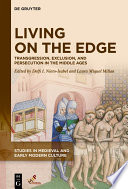
Living on the Edge was written by Delfi I. Nieto-Isabel, Laura Miquel Milian.
If you enjoyed Living on the Edge by Delfi I. Nieto-Isabel, Laura Miquel Milian and want to explore similar topics or deepen your understanding, we highly recommend these related book summaries:
These books cover related themes, complementary concepts, and will help you build upon the knowledge gained from Living on the Edge. Each of these summaries provides concise insights that can further enhance your understanding and practical application of the ideas presented in Living on the Edge.