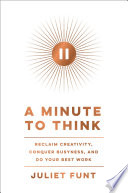
In a world that glorifies speed and productivity, the book emphasizes the necessity of taking time to reflect. Reflection allows individuals to pause and consider their thoughts, actions, and decisions. It is not merely a break from work but a powerful tool for enhancing creativity and decision-making. The author argues that reflection leads to deeper insights and better problem-solving abilities. By integrating reflection into daily routines, individuals can enhance their cognitive functions, leading to more thoughtful and effective outcomes in both personal and professional realms.
Continue readingThe book explores the concept of mindfulness, urging readers to be present in the moment. Mindfulness is depicted as a counterbalance to the distractions of modern life, which often pull attention in multiple directions. By practicing mindfulness, individuals can improve their focus, reduce stress, and enhance their overall well-being. The author suggests techniques for cultivating mindfulness, including meditation and conscious breathing, which can help individuals reconnect with their thoughts and feelings, ultimately leading to improved mental clarity and emotional resilience.
Continue readingA significant theme in the book is the distinction between fast and slow thinking. Fast thinking, while often necessary in urgent situations, can lead to impulsive decisions and errors. Slow thinking, on the other hand, encourages thorough analysis and careful consideration. The author advocates for creating environments that foster slow thinking, allowing for deeper analysis and more innovative solutions. By valuing slow thinking, individuals can counteract the pressure to act quickly, resulting in more thoughtful and effective decision-making.
Continue readingThe book highlights the connection between mental space and creativity. The author posits that creativity flourishes in environments where individuals are not constantly bombarded with tasks and distractions. By intentionally creating space—both mentally and physically—individuals can cultivate an atmosphere conducive to creative thinking. This includes setting aside time for brainstorming, reducing multitasking, and allowing for downtime. The author provides strategies for creating this space, emphasizing the importance of rest and leisure in fostering innovation.
Continue readingQuestions are presented as powerful tools for driving thinking and exploration. The book encourages readers to embrace curiosity and ask more questions, which can lead to deeper understanding and new perspectives. The author discusses different types of questions—open-ended, reflective, and probing—and how they can be used to stimulate thinking and foster discussions. By prioritizing questions over answers, individuals can enhance their learning and development, leading to more enriched experiences both personally and professionally.
Continue readingWhile action is essential in achieving goals, the book argues for a balance between action and thought. The author suggests that excessive focus on productivity can lead to burnout and diminished creativity. By integrating periods of thought and reflection into action-oriented tasks, individuals can achieve a more sustainable approach to work. This balance allows for greater insight and effectiveness in execution, ultimately leading to better outcomes in both personal and professional endeavors.
Continue readingThe final idea revolves around the importance of fostering a culture that values thinking within organizations. The author emphasizes that leaders play a crucial role in shaping this culture by encouraging reflection, creativity, and open dialogue. By creating an environment where thinking is prioritized, organizations can enhance innovation, employee satisfaction, and overall performance. The book provides actionable strategies for leaders to cultivate this culture, highlighting the long-term benefits of investing in the intellectual engagement of their teams.
Continue readingThe reading time for A Minute to Think depends on the reader's pace. However, this concise book summary covers the 7 key ideas from A Minute to Think, allowing you to quickly understand the main concepts, insights, and practical applications in around 20 min.
A Minute to Think is definitely worth reading. The book covers essential topics including The Importance of Reflection, Mindfulness and Presence, The Value of Slow Thinking, providing practical insights and actionable advice. Whether you read the full book or our concise summary, A Minute to Think delivers valuable knowledge that can help you improve your understanding and apply these concepts in your personal or professional life.
A Minute to Think was written by Juliet Funt.
If you enjoyed A Minute to Think by Juliet Funt and want to explore similar topics or deepen your understanding, we highly recommend these related book summaries:
These books cover related themes, complementary concepts, and will help you build upon the knowledge gained from A Minute to Think. Each of these summaries provides concise insights that can further enhance your understanding and practical application of the ideas presented in A Minute to Think.