Visionary leadership is at the heart of successful strategy. Leaders must articulate a clear vision that inspires and aligns the organization. This vision acts as a guiding star, helping teams navigate through uncertainty and change. A leader's ability to communicate this vision effectively can foster a strong organizational culture, encouraging innovation and collaboration among employees. Visionary leaders are also adept at recognizing emerging trends and adapting their strategies accordingly, ensuring the organization remains competitive in a rapidly evolving market. In a world where technology and consumer preferences shift quickly, having a leader who can foresee these changes and pivot the organization’s strategy is invaluable.
Continue readingA customer-centric approach is essential for crafting effective strategies. Organizations must prioritize understanding their customers' needs, preferences, and behaviors to deliver products and services that resonate with them. This involves gathering data, conducting market research, and engaging with customers directly. Companies that excel in this area often create strong brand loyalty and enjoy repeat business. By placing the customer at the center of their strategic planning, organizations can identify opportunities for innovation, enhance customer experiences, and ultimately drive growth. This approach not only helps in retaining existing customers but also attracts new ones, as satisfied customers often become brand advocates.
Continue readingInnovation is a critical driver of competitive advantage. Organizations must foster a culture that encourages creativity and experimentation. This means not only investing in research and development but also being open to new ideas from all levels of the organization. Embracing innovation involves taking calculated risks and learning from failures, which can lead to breakthroughs in products, services, and processes. Companies that successfully integrate innovation into their strategic framework are better equipped to respond to market changes and can capitalize on new opportunities faster than their competitors. Furthermore, innovation can lead to operational efficiencies that enhance profitability and sustainability.
Continue readingStrategic agility refers to an organization’s ability to adapt its strategies swiftly in response to changing market conditions. This requires a flexible organizational structure and a culture that embraces change. Companies with strategic agility are often more resilient, as they can pivot quickly when faced with challenges or opportunities. This entails not only having a proactive approach to potential disruptions but also regularly reviewing and updating strategic plans. Organizations that exhibit strategic agility can better manage uncertainties and leverage new trends, ensuring long-term success in a dynamic business landscape.
Continue readingIn the age of information, data-driven decision making is paramount. Organizations must leverage analytics and data insights to inform their strategies. This involves collecting relevant data, analyzing it to identify patterns and trends, and using these insights to guide strategic choices. Data-driven decision making minimizes risks and enhances the effectiveness of strategies by grounding them in empirical evidence. Companies that excel in this area can make informed choices that align with market demands and operational capabilities, leading to better outcomes and higher returns on investment.
Continue readingAchieving a sustainable competitive advantage requires a deep understanding of the market landscape and the organization’s unique strengths. Companies should focus on building capabilities that are difficult for competitors to replicate, such as proprietary technologies, strong brand equity, or exclusive partnerships. This involves continuous investment in talent development, operational efficiencies, and customer relationships. Organizations that cultivate a sustainable competitive advantage are more likely to thrive over the long term, as they can withstand competitive pressures and market fluctuations. This strategic focus helps ensure consistent growth and profitability.
Continue readingIn today’s interconnected world, organizations must recognize the importance of collaborative ecosystems. This involves forming strategic partnerships and alliances that enhance capabilities and expand market reach. By collaborating with other businesses, governments, and institutions, organizations can leverage shared resources, knowledge, and expertise to drive innovation and growth. Collaborative ecosystems enable companies to tackle complex challenges and capitalize on opportunities that may be beyond their individual capabilities. This strategic approach fosters a culture of cooperation and mutual benefit, leading to enhanced competitiveness and resilience.
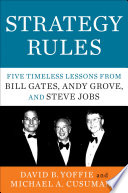
Continue readingThe reading time for Strategy Rules depends on the reader's pace. However, this concise book summary covers the 7 key ideas from Strategy Rules, allowing you to quickly understand the main concepts, insights, and practical applications in around 24 min.
Strategy Rules is definitely worth reading. The book covers essential topics including Visionary Leadership, Customer-Centric Approach, Embrace Innovation, providing practical insights and actionable advice. Whether you read the full book or our concise summary, Strategy Rules delivers valuable knowledge that can help you improve your understanding and apply these concepts in your personal or professional life.
Strategy Rules was written by David B. Yoffie, Michael A. Cusumano.
If you enjoyed Strategy Rules by David B. Yoffie, Michael A. Cusumano and want to explore similar topics or deepen your understanding, we highly recommend these related book summaries:
These books cover related themes, complementary concepts, and will help you build upon the knowledge gained from Strategy Rules. Each of these summaries provides concise insights that can further enhance your understanding and practical application of the ideas presented in Strategy Rules.