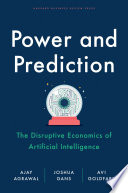
Book cover Power and Prediction
Select an audio
0:00
Intro - Power and Prediction --:--
1. The Interplay of Power and Data --:--
2. The Role of Algorithms in Decision Making --:--
3. Predictive Power in Business Strategy --:--
4. Ethics and Governance of Predictive Technologies --:--
5. The Future of Work in a Data-Driven World --:--
6. Social Dynamics and Predictive Insights --:--
7. The Balance of Power in a Predictive Society --:--
Power and Prediction

Ajay Agrawal, Avi Goldfarb, Joshua Gans

The Disruptive Economics of Artificial Intelligence

23 min

Summary

Power and Prediction presents a comprehensive analysis of how data and predictive analytics are reshaping power dynamics in society. The authors argue that in today's world, power is increasingly derived from the ability to harness and interpret data. This shift has profound implications for various sectors, including business, politics, and social interactions. The book emphasizes the importance of understanding the interplay between power and data, particularly in decision-making processes where algorithms play a crucial role. Through case studies and examples, the authors illustrate the potential benefits and risks associated with predictive technologies, highlighting the ethical considerations that must accompany their use. The discussion extends to the future of work, emphasizing the need for a data-literate workforce capable of leveraging predictive insights to drive innovation. Moreover, the authors explore the social implications of predictive analytics, suggesting that while these tools can foster positive change, they also pose risks of manipulation and inequality. Ultimately, Power and Prediction advocates for a balanced approach to data governance, urging organizations and individuals to consider the broader societal impacts of their predictive capabilities. The book serves as a timely reminder of the responsibilities that come with power in a data-driven world, making it essential reading for anyone interested in the intersection of technology, ethics, and society.

The Interplay of Power and Data

In 'Power and Prediction', the authors delve into how power dynamics are influenced by data and predictive analytics. They argue that power in the modern world is not just about control over resources or people, but increasingly about control over information. This idea highlights the importance of data in shaping decisions and outcomes in various sectors, including politics, business, and social interactions. The book illustrates how organizations leverage data to predict behaviors and trends, thereby gaining a competitive edge. This interplay between power and data signifies a shift in how authority is established and maintained, suggesting that those who can harness data effectively will hold significant power in the future.

Continue reading
The concept of the interplay between power and data is a central theme that reflects the transformative impact of information in contemporary society. In this context, power is redefined beyond traditional notions of control over tangible resources or the ability to influence people directly. Instead, it emphasizes the importance of information as a critical asset that shapes decision-making processes and outcomes across various domains.

Data has emerged as a fundamental component in the exercise of power, particularly in sectors like politics, business, and social interactions. Organizations and governments increasingly rely on data analytics to inform their strategies, predict trends, and understand behaviors. This reliance on data means that the ability to collect, analyze, and interpret information becomes a source of power in itself.

The text illustrates how organizations can utilize predictive analytics to anticipate consumer behaviors, market trends, and even social movements. By harnessing large datasets and employing sophisticated algorithms, these entities can forecast future actions with remarkable accuracy. This capability not only provides a competitive advantage but also allows organizations to manipulate outcomes in their favor, reinforcing their authority in the marketplace or political arena.

Moreover, the discussion extends to the ethical implications of this power dynamic. As organizations gain unprecedented access to personal data, concerns arise regarding privacy, surveillance, and the potential for misuse of information. The ability to predict and influence behavior raises questions about autonomy and consent, as individuals may find themselves subjected to decisions made by entities armed with vast amounts of data about them.

This shift in the locus of power highlights a broader societal transformation where data literacy becomes essential. Individuals and organizations that can effectively navigate and leverage data will find themselves in positions of influence, while those who cannot may risk becoming marginalized. This evolution suggests that future authority will increasingly depend on one's capability to harness and interpret data, marking a significant departure from traditional power structures.

In summary, the interplay of power and data signifies a profound change in how authority is established and maintained in modern society. It underscores the necessity for individuals and organizations to adapt to this new reality, where mastering the art of data utilization is imperative for success and influence in an increasingly data-driven world.

The Role of Algorithms in Decision Making

The authors explore the growing reliance on algorithms in decision-making processes. Algorithms, powered by vast amounts of data, are increasingly being used to make predictions about human behavior, market trends, and even political outcomes. This reliance raises ethical questions about transparency, accountability, and bias in algorithmic decision-making. The book discusses case studies where algorithmic predictions have led to both positive and negative outcomes, emphasizing the need for critical evaluation of how these tools are employed. It stresses that while algorithms can enhance efficiency and accuracy, they can also perpetuate existing biases if not carefully managed.

Continue reading
The discussion surrounding the role of algorithms in decision-making processes highlights a significant transformation in how choices are made across various sectors, including business, healthcare, finance, and governance. As organizations and institutions increasingly turn to algorithms to guide their decisions, the implications of this shift warrant careful consideration. Algorithms, which are essentially sets of rules or calculations designed to process data and generate predictions, have become integral to understanding and forecasting human behavior, market dynamics, and even sociopolitical trends.

One of the primary advantages of using algorithms is their ability to analyze vast amounts of data at speeds and accuracies that far exceed human capabilities. This computational power allows for the identification of patterns and correlations that may not be immediately apparent to human analysts. For instance, in the realm of marketing, algorithms can predict consumer purchasing behaviors based on historical data, enabling companies to tailor their strategies to meet anticipated demands. Similarly, in healthcare, algorithms can assess patient data to predict outcomes, streamline diagnoses, and personalize treatment plans, potentially improving patient care.

However, this growing reliance on algorithms is not without its challenges and ethical dilemmas. The authors delve into the concept of transparency, emphasizing the importance of understanding how algorithms arrive at their conclusions. Many algorithms function as "black boxes," meaning that their internal workings are not easily interpretable by users or stakeholders. This opacity can lead to a lack of accountability, as it becomes difficult to ascertain who is responsible for decisions made by these systems, particularly when outcomes are unfavorable or harmful.

Bias is another critical concern in the realm of algorithmic decision-making. Algorithms are trained on historical data, which may inherently reflect existing societal biases. If these biases are not addressed, algorithms can inadvertently perpetuate and even exacerbate inequalities. For example, in the criminal justice system, algorithms used for risk assessments have been criticized for disproportionately affecting marginalized communities, leading to unfair sentencing and parole decisions. The book emphasizes the importance of scrutinizing the data that feeds into these algorithms and advocating for diverse datasets that can help mitigate bias.

The authors also present various case studies that illustrate both the successes and failures of algorithmic predictions. These examples serve to underscore the dual nature of algorithms as tools that can enhance efficiency and accuracy while simultaneously posing risks if not managed with care. The discussions around these case studies encourage readers to critically evaluate the context in which algorithms are deployed and to consider the potential consequences of their use.

In conclusion, the exploration of algorithms in decision-making processes reveals a complex interplay between technological advancement and ethical responsibility. While algorithms offer promising avenues for improving decision-making efficiency and accuracy, it is imperative that stakeholders remain vigilant about the implications of their use. This includes fostering transparency, ensuring accountability, and actively working to eliminate biases within algorithmic systems. Ultimately, the responsible integration of algorithms into decision-making frameworks requires a balanced approach that recognizes both their potential benefits and their inherent risks.

Predictive Power in Business Strategy

In the context of business, the book emphasizes the importance of predictive analytics in shaping strategy. Companies that effectively utilize data to forecast market trends and consumer behavior can position themselves advantageously against competitors. The authors provide insights into how businesses can implement predictive models to enhance decision-making processes, optimize operations, and tailor products to meet consumer needs. This idea underscores the necessity for organizations to invest in data capabilities and develop a culture that embraces data-driven decision-making as a core component of their strategy.

Continue reading
In the realm of business strategy, the significance of predictive analytics cannot be overstated. The text delves into how organizations can harness the power of data analytics to not only anticipate future market trends but also to gain a competitive edge in an increasingly dynamic environment. The authors argue that companies that adeptly utilize predictive models are better positioned to navigate the complexities of consumer behavior, which is often influenced by a myriad of factors such as economic shifts, technological advancements, and changing societal norms.

The core premise is that predictive analytics serves as a strategic tool that enables businesses to make informed decisions based on empirical data rather than relying solely on intuition or historical performance. By analyzing patterns and trends within large datasets, organizations can forecast potential shifts in consumer preferences, allowing them to adjust their offerings proactively rather than reactively. This forward-thinking approach not only enhances operational efficiency but also fosters innovation, as companies can develop products and services that are more closely aligned with consumer demands.

Moreover, the discussion emphasizes the critical need for businesses to cultivate a data-centric culture. This involves not just investing in advanced data analytics technologies but also fostering an organizational mindset that prioritizes data-driven decision-making at all levels. The authors suggest that for predictive analytics to be truly effective, organizations must ensure that their teams are equipped with the necessary skills to interpret data insights and apply them in strategic contexts. This may require training programs, cross-functional collaboration, and the establishment of clear communication channels to facilitate the sharing of data insights across departments.

In addition to enhancing decision-making processes, the text highlights how predictive analytics can optimize operations. By leveraging data to identify inefficiencies in workflows or supply chains, businesses can streamline their operations, reduce costs, and ultimately improve their bottom line. The ability to predict demand fluctuations can also lead to better inventory management, ensuring that companies can meet customer needs without overstocking or understocking products.

Ultimately, the authors advocate for a proactive approach to strategy development, where predictive analytics is not merely an add-on but a fundamental component of the strategic framework. This perspective encourages organizations to view data as a strategic asset that can drive growth, enhance customer satisfaction, and foster long-term sustainability in a competitive marketplace. By embracing this paradigm, businesses can position themselves not just as reactive players in their industries but as forward-thinking leaders who are equipped to anticipate and shape the future.

Ethics and Governance of Predictive Technologies

The ethical implications of predictive technologies are a central theme in the book. The authors argue that as organizations increasingly rely on data and algorithms, there is a pressing need for ethical frameworks and governance structures to guide their use. They discuss the potential for misuse of data, invasion of privacy, and the consequences of biased algorithms. The book advocates for a proactive approach to ethics in technology, urging organizations to consider the societal impacts of their predictive tools and to establish accountability measures to mitigate risks.

Continue reading
The ethical implications surrounding predictive technologies are increasingly recognized as critical in today’s data-driven landscape. As organizations harness the power of data and algorithms to make decisions, the necessity for robust ethical frameworks and governance structures becomes paramount. This discussion highlights several key areas of concern regarding the use of predictive technologies.

One significant issue is the potential misuse of data. Organizations often collect vast amounts of personal information, sometimes without the explicit consent of individuals. This raises ethical questions about ownership and control over personal data. When data is used to make predictions about individuals, such as in hiring practices or credit scoring, there is a risk that sensitive information could be exploited or misinterpreted, leading to harmful consequences for those individuals. The authors emphasize the need for transparency in data collection and usage to ensure that individuals are aware of how their information is being utilized.

Invasion of privacy is another pressing concern linked to predictive technologies. As algorithms analyze personal data to generate insights, there is a fine line between beneficial use and intrusive surveillance. The authors argue that organizations must be vigilant in protecting individuals' privacy rights and must consider the ethical implications of monitoring behaviors or predicting actions based on personal data. This includes being mindful of the potential for creating a surveillance culture that undermines trust in institutions.

Bias in algorithms is a further critical topic discussed in relation to ethical governance. Predictive models can inadvertently perpetuate or even exacerbate existing societal biases if the data used to train these algorithms reflects historical inequalities. For instance, if a predictive model is trained on biased data, it may produce skewed results that unfairly disadvantage certain groups. The authors advocate for rigorous testing and validation of algorithms to ensure fairness and equity, stressing the importance of diverse representation in the data sets used to train these models.

The book calls for a proactive approach to ethics in technology, urging organizations to not only comply with existing regulations but to actively engage in ethical deliberation about their predictive tools. This involves establishing clear accountability measures to mitigate risks associated with the use of predictive technologies. Organizations are encouraged to create interdisciplinary teams that include ethicists, data scientists, and community representatives to foster a comprehensive understanding of the societal impacts of their decisions.

Moreover, the authors highlight the importance of stakeholder engagement in the governance of predictive technologies. By involving the communities affected by predictive algorithms in the decision-making process, organizations can better understand the potential repercussions of their technologies and work collaboratively to address concerns. This participatory approach is vital for building trust and ensuring that the deployment of predictive technologies aligns with societal values.

In summary, the discussion on ethics and governance of predictive technologies underscores the urgent need for organizations to adopt ethical frameworks that prioritize transparency, accountability, and fairness. By addressing the potential for misuse of data, invasion of privacy, and algorithmic bias, organizations can navigate the complex landscape of predictive technologies responsibly and ethically. This proactive stance not only protects individuals but also enhances the credibility and reliability of predictive tools in society.

The Future of Work in a Data-Driven World

The book also examines how the rise of predictive analytics is transforming the workplace. As organizations adopt data-driven approaches, the nature of work is changing, with an increasing emphasis on skills related to data analysis and interpretation. The authors discuss the implications for workforce development, including the need for continuous learning and adaptability. They highlight the importance of fostering a data-literate workforce that can leverage predictive insights to drive innovation and efficiency, ultimately reshaping the future of work.

Continue reading
The examination of the future of work in a data-driven world reveals a significant transformation in how organizations operate and how employees engage with their roles. As predictive analytics becomes more integrated into business processes, the workplace is evolving to prioritize skills that are essential for interpreting and analyzing data. This shift is not merely about adopting new technologies; it fundamentally alters the skill sets that are in demand across various industries.

The emphasis on data analysis skills means that employees are increasingly required to be comfortable with data interpretation, statistical reasoning, and the use of analytical tools. This transformation is driven by the need for organizations to make informed decisions based on data insights rather than relying solely on intuition or traditional methods. Consequently, there is a growing expectation for workers to understand how to extract meaningful information from complex datasets and apply it to real-world business challenges.

Moreover, the implications for workforce development are profound. Organizations must recognize that continuous learning is no longer optional but essential. The rapid pace of technological advancement necessitates that employees engage in lifelong learning to keep their skills relevant. This means that training programs should not just focus on current tools and technologies but also on fostering a mindset of adaptability and curiosity. Employees need to be encouraged to seek out new learning opportunities, whether through formal education, online courses, or on-the-job training.

In this context, fostering a data-literate workforce becomes a strategic priority. Data literacy encompasses not only the ability to read and interpret data but also the capacity to think critically about data sources, understand the context in which data is generated, and communicate insights effectively to stakeholders. Organizations that invest in building a data-literate culture are better positioned to leverage predictive insights for innovation and operational efficiency. This cultural shift involves creating an environment where employees feel empowered to ask questions, challenge assumptions, and experiment with data-driven approaches.

Ultimately, the reshaping of the future of work in a data-driven world is about more than just technology; it is about cultivating a workforce that is equipped to thrive in an increasingly complex and data-saturated environment. As organizations adapt to these changes, they will not only enhance their competitive edge but also contribute to a more informed and agile workforce capable of navigating the challenges of tomorrow. The intersection of data, technology, and human skills will define the new landscape of work, making it imperative for both employees and organizations to embrace this evolution.

Social Dynamics and Predictive Insights

The authors explore how predictive analytics can be applied to understand and influence social dynamics. By analyzing social data, organizations can gain insights into public sentiment, social movements, and community behaviors. The book discusses how these insights can be used by governments, NGOs, and businesses to engage effectively with communities and address social issues. This idea emphasizes the potential for predictive analytics to foster positive social change, while also cautioning against the risks of manipulation and exploitation of social data.

Continue reading
The concept of applying predictive analytics to social dynamics is a fascinating intersection of technology, sociology, and public policy. The exploration begins with the understanding that social data, which includes everything from social media interactions to survey responses, can provide a wealth of information regarding how individuals and communities behave, think, and feel. By leveraging advanced data analysis techniques, organizations can analyze patterns and trends within this data, allowing them to gain insights into public sentiment and societal shifts.

The discussion highlights the role of predictive analytics in identifying emerging social movements and understanding the underlying factors that drive community behaviors. For instance, by analyzing social media trends and engagement metrics, organizations can discern how public opinion is shifting on critical issues such as climate change, healthcare, or social justice. This understanding can empower governments and NGOs to tailor their messaging and initiatives to resonate more effectively with the communities they serve.

Furthermore, the text delves into the practical applications of these insights. Governments can utilize predictive analytics to forecast the impact of policies or programs before they are implemented, thus allowing for more informed decision-making. NGOs can harness these insights to better align their missions with the needs and desires of the communities they aim to support, ensuring that their interventions are relevant and timely. Businesses, too, can benefit from understanding social dynamics by engaging with consumers in a way that reflects their values and concerns, ultimately leading to more effective marketing strategies and product development.

However, the discussion does not shy away from the ethical implications of using social data for predictive purposes. While the potential for fostering positive social change is significant, there are also inherent risks associated with manipulation and exploitation. The authors caution that organizations must tread carefully, as the misuse of social data can lead to the perpetuation of biases, invasion of privacy, and even the erosion of trust between communities and institutions. This highlights the importance of establishing ethical guidelines and frameworks for the responsible use of predictive analytics in social contexts.

In summary, the exploration of social dynamics through predictive analytics presents a dual-edged sword. On one hand, it holds the promise of meaningful engagement and positive societal impact, while on the other, it raises critical ethical questions that must be addressed. The insights gleaned from social data can be a powerful tool for understanding and influencing community behaviors, but they must be wielded with care and responsibility to avoid unintended consequences.

The Balance of Power in a Predictive Society

Finally, the book addresses the shifting balance of power in society as predictive technologies become more prevalent. The authors argue that those who control data and predictive capabilities hold significant power, potentially leading to inequalities in access and influence. They discuss the implications for democracy, governance, and social equity, advocating for a more equitable distribution of data resources. This idea calls for a critical examination of how power dynamics are evolving in a data-driven world and the responsibilities that come with wielding predictive power.

Continue reading
The discussion surrounding the balance of power in a society increasingly driven by predictive technologies is multifaceted and critical to understanding contemporary social dynamics. As predictive technologies become more integrated into various aspects of life—ranging from personal decision-making to large-scale governance—the control of data emerges as a pivotal factor in determining who holds power and influence.

At the core of this idea is the observation that data is no longer just a byproduct of human activity; it has become a vital resource that shapes decisions and outcomes. Organizations and individuals who possess the means to collect, analyze, and interpret vast amounts of data gain a significant advantage in predicting behaviors and trends. This capability does not merely enhance operational efficiency; it translates into a form of power that can be wielded to influence public opinion, shape policy decisions, and even manipulate market dynamics.

The authors emphasize that this shift creates a new kind of inequality. Those with access to advanced predictive technologies and the data that fuels them can dictate terms, leaving others—particularly marginalized groups—at a disadvantage. This disparity raises critical questions about social equity and access to technology. If only a select few can harness the power of predictive analytics, the potential for societal stratification increases, leading to an environment where the rich get richer and the powerful grow even more influential.

Furthermore, the implications of this power imbalance extend into the realms of democracy and governance. The ability to predict and influence voter behavior, for instance, can skew democratic processes. When certain entities can leverage data to manipulate electoral outcomes or sway public sentiment, the very foundations of democratic governance are undermined. This manipulation can lead to a scenario where the voices of the many are drowned out by the calculated strategies of the few, raising alarms about the erosion of democratic ideals.

The authors advocate for a more equitable distribution of data resources, arguing that it is essential to democratize access to predictive technologies. This involves not only ensuring that diverse populations can engage with and benefit from these technologies but also fostering a culture of transparency and accountability among those who wield predictive power. By promoting an inclusive approach to data governance, society can work towards mitigating the risks of inequality and fostering a more balanced power dynamic.

In essence, the conversation about the balance of power in a predictive society is not just about the technologies themselves but also about the ethical considerations and responsibilities that come with their use. It calls for a critical examination of how power dynamics are evolving in a data-driven world, urging stakeholders—from policymakers to tech developers—to recognize their roles in shaping a future that is equitable and just. The underlying message is clear: as we advance into an era dominated by predictive capabilities, we must remain vigilant about who controls these tools and the implications of that control for society as a whole.

Who Should Read This Book?

This book is ideal for professionals in technology, data science, and business strategy, as well as policymakers and ethicists concerned with the implications of predictive analytics. It is also relevant for students and academics in fields such as sociology, political science, and information technology.

Summaries like Power and Prediction

Prediction Machines
Ajay Agrawal, Avi Goldfarb, Joshua Gans
The Simple Economics of Artificial Intelligence
20 min
The Atlas of AI
Kate Crawford
Power, Politics, and the Planetary Costs of Artificial Intelligence
21 min
Everybody Lies
Seth Stephens-Davidowitz
What the Internet Can Tell Us about Who We Really Are
18 min
The People Vs Tech
Jamie Bartlett
How the internet is killing democracy (and how we save it)
7 min
New Dark Age
James Bridle
Technology and the End of the Future
20 min
Technofeudalism
Yanis Varoufakis
What Killed Capitalism
20 min
The Second Machine Age
Andrew Mcafee, Erik Brynjolfsson
Work Progress and Prosperity in a Time of Brilliant Technologies
21 min
Predictive Analytics
Eric Siegel
The Power to Predict Who Will Click, Buy, Lie, Or Die
23 min
Privacy is Power
Carissa Véliz
Why and How You Should Take Back Control of Your Data
19 min
The Chaos Machine
Max Fisher
The Inside Story of How Social Media Rewired Our Minds and Our World
19 min
Genius Makers
Cade Metz
The Mavericks Who Brought A. I. to Google, Facebook, and the World
23 min
AI Superpowers
Kai-Fu Lee
China, Silicon Valley, and the New World Order
24 min
The Internet Is Not What You Think It Is
Justin E. H. Smith
A History, a Philosophy, a Warning
20 min
Weapons of Math Destruction
Cathy O'Neil
How Big Data Increases Inequality and Threatens Democracy
21 min
The Age of AI
Daniel Huttenlocher, Eric Schmidt, Henry A Kissinger
"THE BOOK WE ALL NEED"
21 min

About the Authors

Ajay Agrawal

Ajay Agrawal is a prominent figure in the fields of business and technology, known for his contributions to entrepreneurship and innovation. He is a co-founder of the Rotman School of Management's Creative Destruction Lab, an initiative designed to support early-stage companies through mentorship and resources. Agrawal's work often focuses on the intersection of technology and economic growth, emphasizing the importance of data-driven decision-making in business.

In addition to his role at the Creative Destruction Lab, Agrawal has been involved in various academic and research endeavors, contributing to the understanding of how technology impacts industries and society. His insights into artificial intelligence and its implications for the future of work have garnered attention in both academic and business circles.

Agrawal is also recognized for his thought leadership, frequently speaking at conferences and events where he shares his expertise on innovation, entrepreneurship, and the evolving landscape of technology. His work aims to inspire the next generation of entrepreneurs and business leaders to harness the power of technology for positive change.

While specific details about his educational background and personal achievements may not be widely documented, Ajay Agrawal remains a respected voice in discussions surrounding technology and its role in shaping the future of business.

Avi Goldfarb

Avi Goldfarb is a prominent figure in the fields of business and technology, recognized for his contributions to the understanding of data-driven decision-making and the impact of artificial intelligence on the economy. He is known for his research that explores the intersection of technology and business strategy, particularly in how organizations can leverage data to enhance their operations and decision-making processes.

Goldfarb has held academic positions at various institutions, where he has taught courses related to marketing, technology, and analytics. His work often emphasizes the importance of data in shaping business strategies and the implications of technological advancements for market dynamics.

In addition to his academic pursuits, Goldfarb has published extensively in both scholarly journals and popular media, sharing insights on the evolving landscape of technology and its influence on business practices. He is also known for his engagement with industry leaders and policymakers, contributing to discussions on the ethical and economic implications of emerging technologies.

Goldfarb's expertise is frequently sought after in forums and conferences, where he shares his knowledge on the future of technology in business. His work continues to inspire professionals and scholars alike, as he navigates the complexities of technology's role in modern economies.

Joshua Gans

Joshua Gans is a prominent economist and academic known for his contributions to the fields of business, technology, and innovation. He has held various academic positions, including a professorship at the Rotman School of Management at the University of Toronto. Gans is recognized for his research on the economics of digital technology and the implications of innovation on business strategy.

His work often explores the intersection of economics and technology, examining how digital advancements reshape industries and influence competitive dynamics. Gans has authored several influential publications and papers that address topics such as the economics of platforms, the role of artificial intelligence in business, and the impact of technological change on market structures.

In addition to his academic pursuits, Gans is known for his engagement with the business community, providing insights into the strategic challenges faced by firms in a rapidly evolving technological landscape. He has also been involved in public discourse on policy issues related to innovation and economic growth.

Gans is a sought-after speaker and has contributed to various media outlets, sharing his expertise on the implications of technology for business and society. His work continues to influence both academic thought and practical applications in the realms of economics and management.

Power and Prediction FAQs

How long does it take to read Power and Prediction?

The reading time for Power and Prediction depends on the reader's pace. However, this concise book summary covers the 7 key ideas from Power and Prediction, allowing you to quickly understand the main concepts, insights, and practical applications in around 23 min.

Is Power and Prediction a good book? Is it worth reading?

Power and Prediction is definitely worth reading. The book covers essential topics including The Interplay of Power and Data, The Role of Algorithms in Decision Making, Predictive Power in Business Strategy, providing practical insights and actionable advice. Whether you read the full book or our concise summary, Power and Prediction delivers valuable knowledge that can help you improve your understanding and apply these concepts in your personal or professional life.

Who is the author of Power and Prediction?

Power and Prediction was written by Ajay Agrawal, Avi Goldfarb, Joshua Gans.

What to read after Power and Prediction?

If you enjoyed Power and Prediction by Ajay Agrawal, Avi Goldfarb, Joshua Gans and want to explore similar topics or deepen your understanding, we highly recommend these related book summaries:

  • Prediction Machines by Ajay Agrawal, Avi Goldfarb, Joshua Gans
  • The Atlas of AI by Kate Crawford
  • Everybody Lies by Seth Stephens-Davidowitz
  • The People Vs Tech by Jamie Bartlett
  • New Dark Age by James Bridle

These books cover related themes, complementary concepts, and will help you build upon the knowledge gained from Power and Prediction. Each of these summaries provides concise insights that can further enhance your understanding and practical application of the ideas presented in Power and Prediction.