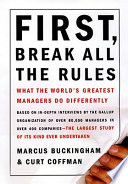
Book cover First, Break All The Rules
Select an audio
0:00
Intro - First, Break All The Rules --:--
1. The Role of Great Managers --:--
2. The Importance of Employee Engagement --:--
3. The Four Keys to Employee Engagement --:--
4. Hiring for Talent, Not Experience --:--
5. The Role of Feedback in Development --:--
6. The Impact of a Strong Workplace Culture --:--
7. The Need for Flexibility in Management --:--
First, Break All The Rules

Curt Coffman, Marcus Buckingham

What The Worlds Greatest Managers Do Differently

23 min

Summary

In 'First, Break All The Rules,' authors Marcus Buckingham and Curt Coffman explore the practices of effective management and the importance of employee engagement. The book is based on extensive research conducted by the Gallup Organization, which identified that great managers prioritize individual strengths and create environments where employees can thrive. The authors argue that traditional management practices often stifle creativity and engagement, leading to low employee morale and performance. Instead, they advocate for a paradigm shift in how managers approach their roles.

The book begins by emphasizing the critical role of managers in shaping employee experiences. Great managers understand that each employee is unique and that the best way to motivate them is to align their roles with their strengths. This focus on individual talents leads to increased engagement, productivity, and job satisfaction. The authors highlight that engaged employees are more likely to stay with the organization and contribute positively to its success.

One of the key messages of the book is the importance of employee engagement as a predictor of organizational performance. The authors identify four essential elements that contribute to engagement: clarity of expectations, opportunities for development, recognition for contributions, and a supportive work environment. By addressing these areas, managers can create conditions that foster engagement and drive performance.

The book also challenges conventional hiring practices by advocating for hiring based on talent rather than experience. The authors argue that innate abilities are a better predictor of success than traditional qualifications, encouraging organizations to focus on identifying and nurturing talent.

Additionally, the authors stress the importance of feedback in employee development. Regular, constructive feedback helps employees understand their performance and fosters a culture of open communication. This feedback should be specific and focused on behaviors, enabling employees to feel valued and supported in their roles.

The impact of a strong workplace culture is another significant theme in the book. A positive culture attracts and retains talent, leading to higher levels of employee satisfaction and performance. Managers play a crucial role in shaping this culture by modeling desired behaviors and promoting shared values.

Lastly, the book emphasizes the need for flexibility in management practices. Managers should be willing to adapt their approaches to meet the diverse needs of employees, creating an inclusive and supportive environment that empowers individuals to excel.

Overall, 'First, Break All The Rules' provides valuable insights into effective management practices that prioritize employee engagement and strengths. The authors challenge traditional management norms and offer practical strategies for creating a thriving workplace culture. By breaking the rules of conventional management, organizations can unlock the full potential of their employees and drive success.

The Role of Great Managers

Great managers play a crucial role in the success of organizations by focusing on individual strengths rather than weaknesses. They understand that every employee has unique talents and capabilities, and the best way to motivate them is to align their roles with these strengths. This approach not only enhances employee satisfaction but also drives performance. By fostering an environment where employees can thrive, managers can cultivate a culture of engagement and productivity. The book emphasizes that effective management is not about enforcing rules but about breaking them to create customized paths for each employee.

Continue reading
Great managers are pivotal to the overall success of organizations, and their approach significantly differs from traditional management practices. Rather than concentrating on the weaknesses or shortcomings of their team members, these managers prioritize recognizing and leveraging individual strengths. This shift in perspective is fundamental because it acknowledges that each employee possesses unique talents and capabilities that can be harnessed for the benefit of both the individual and the organization.

The emphasis on aligning roles with employees' strengths is particularly important. When employees are placed in positions that resonate with their inherent abilities, they are more likely to feel engaged and satisfied with their work. This alignment not only boosts morale but also enhances productivity, as employees are more motivated to contribute when they are working in areas where they excel. Great managers understand that motivation is not a one-size-fits-all approach; it requires a tailored strategy that considers the diverse talents within a team.

Creating an environment that allows employees to thrive is another cornerstone of effective management. This involves fostering a culture where individuals feel empowered to express their ideas, take risks, and innovate without the fear of punitive consequences. In such an environment, employees are more likely to take ownership of their work, leading to higher levels of engagement and a collective drive toward achieving organizational goals.

Moreover, the notion that effective management is about breaking rules rather than enforcing them is a radical departure from conventional managerial practices. Great managers recognize that rigid adherence to established protocols can stifle creativity and hinder individual growth. Instead, they advocate for a more flexible approach that allows for customized paths tailored to the specific needs and strengths of each employee. By doing so, they create a dynamic workplace where innovation can flourish, and employees feel valued for their contributions.

In summary, the role of great managers is not just about overseeing tasks or enforcing compliance; it is about cultivating an environment that celebrates individual strengths and fosters engagement. By breaking away from traditional management norms and focusing on what makes each employee unique, great managers can drive both personal and organizational success, ultimately leading to a more productive and satisfied workforce.

The Importance of Employee Engagement

Employee engagement is a significant predictor of organizational success. The book highlights that engaged employees are more productive, provide better customer service, and are less likely to leave the company. Engaged employees feel a sense of belonging and commitment to their organization, which leads to higher performance levels. The authors argue that managers should focus on creating conditions that foster engagement by recognizing individual contributions, providing opportunities for growth, and cultivating a supportive work environment.

Continue reading
Employee engagement is often cited as a critical factor in determining the overall success and effectiveness of an organization. Engaged employees are not merely those who show up to work; rather, they are individuals who are emotionally invested in their roles and the mission of the organization. This emotional investment translates into a variety of positive outcomes that significantly benefit the organization as a whole.

When employees are engaged, they tend to exhibit higher levels of productivity. This increased productivity is not just a result of working harder; it stems from a deeper connection to the tasks at hand. Engaged employees are more likely to take initiative, go the extra mile, and strive for excellence in their work. They often find joy and fulfillment in their contributions, which drives them to perform at their best consistently.

Moreover, engaged employees are known to provide superior customer service. They understand the importance of their role in the customer experience and are motivated to ensure that customers have positive interactions with the company. This commitment to service can lead to higher customer satisfaction and loyalty, which are essential components of a successful business. When employees feel a sense of pride in their work and a connection to the customers they serve, it creates a virtuous cycle that benefits both the employees and the organization.

Another significant aspect of employee engagement is retention. Organizations with high levels of engagement report lower turnover rates. Engaged employees are less likely to seek employment elsewhere because they feel a strong sense of belonging and loyalty to their organization. This not only saves the company money on recruitment and training costs but also helps maintain continuity and stability within teams.

To cultivate a culture of engagement, managers play a pivotal role. The book emphasizes that it is not enough for leaders to simply hope for engagement; they must actively create the conditions that foster it. This involves recognizing and appreciating individual contributions, which can take many forms, from verbal acknowledgment to formal rewards. When employees feel that their efforts are noticed and valued, they are more likely to remain engaged.

Providing opportunities for growth is another crucial element. Employees want to know that there is a path forward in their careers and that their organization is invested in their development. This can include training programs, mentorship opportunities, and clear pathways for advancement. When employees see that their organization is committed to their professional growth, they are more likely to engage fully in their roles.

Finally, cultivating a supportive work environment is essential for fostering engagement. This means creating a workplace culture where employees feel safe to express their ideas, take risks, and collaborate with others. A supportive environment encourages open communication and teamwork, which are vital for building strong relationships among employees. When individuals feel that they are part of a cohesive team, their engagement levels rise.

In summary, employee engagement is a multifaceted concept that significantly impacts organizational success. By focusing on recognizing contributions, providing growth opportunities, and fostering a supportive environment, managers can create a culture where employees feel engaged, committed, and ultimately more productive. This not only enhances individual performance but also drives the overall success of the organization.

The Four Keys to Employee Engagement

The authors identify four essential elements that contribute to employee engagement: clarity of expectations, opportunities for development, recognition for contributions, and a supportive work environment. Clarity of expectations ensures that employees know what is required of them, which reduces ambiguity and increases confidence. Opportunities for development allow employees to grow their skills and advance in their careers. Recognition for contributions reinforces positive behavior and motivates employees to perform at their best. Lastly, a supportive work environment promotes collaboration and trust, essential components for a thriving workplace.

Continue reading
The concept of employee engagement is multifaceted, and the authors delve into four critical elements that are essential for fostering a highly engaged workforce.

Clarity of expectations serves as the foundation for employee performance and satisfaction. When employees have a clear understanding of what is expected of them in their roles, it diminishes uncertainty and confusion. This clarity allows individuals to focus their efforts on specific goals and objectives, leading to enhanced productivity. It also empowers employees by providing them with a sense of direction, which can significantly boost their confidence in their abilities. When expectations are communicated effectively, employees are more likely to align their personal goals with the organization's objectives, fostering a sense of ownership and accountability.

Opportunities for development are crucial for maintaining employee motivation and engagement over time. Individuals thrive when they are given the chance to enhance their skills and knowledge. This development can take various forms, such as training programs, mentorship opportunities, or challenging assignments that push employees out of their comfort zones. When organizations invest in the growth of their employees, they not only improve their workforce's capabilities but also demonstrate a commitment to their career progression. Employees who see a clear path for advancement are more likely to remain engaged and loyal to the company, as they feel valued and recognized for their potential.

Recognition for contributions plays a vital role in reinforcing positive behaviors and motivating employees to perform at their best. Acknowledgment can come in many forms, from formal awards and bonuses to simple verbal praise or public recognition in team meetings. The key is that recognition should be timely and specific, highlighting exactly what the employee did well. When employees feel appreciated for their efforts, it cultivates a positive work atmosphere and encourages them to continue striving for excellence. This recognition not only boosts individual morale but can also enhance team dynamics, as employees are more likely to support and celebrate each other's successes.

Lastly, a supportive work environment is essential for fostering collaboration and trust among employees. A workplace that encourages open communication, values diverse perspectives, and promotes teamwork can lead to a more engaged and productive workforce. When employees feel safe to express their ideas and opinions without fear of retribution, it creates a culture of innovation and creativity. Additionally, strong relationships among colleagues can lead to increased job satisfaction, as employees are more likely to enjoy their work when they feel connected to their peers. A supportive environment also includes providing the necessary resources and tools for employees to succeed, which further enhances their ability to contribute meaningfully to the organization.

Together, these four elements create a comprehensive framework for understanding and improving employee engagement. By focusing on clarity of expectations, opportunities for development, recognition for contributions, and a supportive work environment, organizations can cultivate a workforce that is not only engaged but also motivated to achieve both personal and organizational goals. This holistic approach to employee engagement ultimately leads to a more productive, innovative, and successful organization.

Hiring for Talent, Not Experience

The book advocates for hiring based on talent rather than experience or qualifications. Traditional hiring practices often prioritize resumes and formal education, but this approach can overlook individuals with the innate abilities that align with the job's demands. The authors argue that talent is a better predictor of success than experience, and organizations should focus on identifying individuals with the right natural talents and potential. This shift in hiring philosophy can lead to a more dynamic workforce that can adapt and excel in various roles.

Continue reading
The emphasis on hiring for talent rather than experience is rooted in the understanding that traditional hiring methods often fail to capture the true potential of candidates. Many organizations rely heavily on resumes, formal education, and previous job titles as indicators of a candidate's capability. While these factors can provide some insights into a person's background, they do not necessarily reflect an individual's innate abilities or their potential to thrive in a specific role.

The argument presented highlights that talent encompasses a range of attributes, including natural skills, personality traits, and cognitive abilities that align with the demands of a job. For instance, a candidate may not have extensive experience in a particular field but may possess exceptional problem-solving skills, creativity, or interpersonal abilities that can significantly contribute to the organization’s success. By focusing on these innate talents, organizations can identify individuals who not only fit the current role but also have the potential to grow and adapt to future challenges.

This shift in hiring philosophy encourages employers to develop a more nuanced understanding of what constitutes 'fit' for a position. It calls for a robust assessment process that evaluates candidates based on their natural strengths, rather than solely on their past experiences. This can involve a variety of methods, such as behavioral interviews, situational assessments, and talent-based evaluations, which help to uncover the unique capabilities that each candidate brings to the table.

Moreover, hiring for talent can lead to a more diverse and dynamic workforce. When organizations prioritize innate abilities over traditional qualifications, they open the door to a broader range of candidates, including those from non-traditional backgrounds who may offer fresh perspectives and innovative ideas. This diversity can enhance creativity and problem-solving within teams, ultimately driving better business outcomes.

Additionally, focusing on talent allows organizations to foster a culture of continuous learning and development. Employees who are hired for their potential are often more engaged and motivated to grow within the company, leading to higher retention rates and a more committed workforce. This approach not only benefits the individual employees but also contributes to building a resilient organization that can adapt to changing market conditions and evolving customer needs.

In summary, the advocacy for hiring based on talent rather than experience represents a transformative shift in how organizations approach recruitment. By identifying and valuing innate abilities, companies can create a more agile, innovative, and ultimately successful workforce that is well-equipped to meet the demands of the future.

The Role of Feedback in Development

Feedback is a critical component of employee development and engagement. The book emphasizes that managers should provide regular, constructive feedback to their employees to help them understand their performance and areas for improvement. This feedback should be specific, timely, and focused on behaviors rather than personal attributes. By creating a culture of open communication, managers can help employees feel valued and supported, which in turn fosters a more engaged and productive workforce.

Continue reading
Feedback serves as a cornerstone in the realm of employee development and engagement, playing a pivotal role in shaping an individual's career trajectory and overall job satisfaction. The emphasis on regular, constructive feedback underscores its importance in fostering an environment where employees can thrive. It is not merely about pointing out what needs to be improved; it is about providing insights that are actionable and relevant to the employee's specific role and responsibilities.

Constructive feedback should be delivered in a manner that is specific and timely. This means that feedback should not be vague or general; instead, it should pinpoint particular behaviors or outcomes that are either commendable or require adjustment. This specificity helps employees understand exactly what they are doing well and where they can enhance their performance. Timeliness is equally crucial; feedback should be provided as close to the event as possible, allowing employees to connect their actions with the feedback they receive. This immediacy promotes a learning environment where employees can make real-time adjustments to their performance.

Moreover, the focus of feedback should be on behaviors rather than personal attributes. This distinction is vital because it shifts the conversation from a potentially defensive stance to a constructive dialogue about actions and results. When feedback is centered on behaviors, it encourages employees to see it as an opportunity for growth rather than a personal attack. This approach not only helps in maintaining a positive atmosphere but also promotes a culture of continuous improvement.

Creating a culture of open communication is another essential element of effective feedback. When managers cultivate an environment where employees feel safe to share their thoughts, concerns, and suggestions, it fosters trust and collaboration. Employees who feel valued and supported are more likely to engage fully with their work, leading to higher levels of productivity and job satisfaction. This open dialogue also empowers employees to take ownership of their development, as they are more inclined to seek feedback and guidance when they know their managers are approachable and invested in their growth.

In summary, the practice of providing regular, constructive feedback is integral to employee development and engagement. By being specific, timely, and behavior-focused, and by fostering a culture of open communication, managers can create an environment where employees feel appreciated and motivated. This, in turn, contributes to a more engaged and productive workforce, ultimately benefiting the organization as a whole.

The Impact of a Strong Workplace Culture

A strong workplace culture is essential for attracting and retaining talent. The authors argue that organizations with a positive culture see higher levels of employee satisfaction, engagement, and performance. A strong culture aligns the values and behaviors of employees with the organization's mission, creating a sense of purpose and belonging. Managers play a vital role in shaping this culture by modeling desired behaviors, promoting shared values, and ensuring that the workplace is inclusive and supportive.

Continue reading
A strong workplace culture serves as the backbone of any successful organization, significantly influencing its ability to attract and retain talent. The essence of a strong culture lies in its capacity to create an environment where employees feel valued, engaged, and motivated to contribute to the organization's goals. When the culture is positive, employees experience higher levels of satisfaction, which directly correlates to their performance and productivity.

The authors emphasize that a well-defined culture aligns the values and behaviors of employees with the overarching mission of the organization. This alignment fosters a sense of purpose among team members, as they can see how their individual contributions fit into the larger picture. When employees understand and embrace the mission, they are more likely to feel a sense of belonging, which is crucial for long-term engagement.

Managers are pivotal in shaping and nurturing this culture. They are not just responsible for overseeing tasks; they are also role models whose behaviors set the tone for the workplace environment. By modeling the desired behaviors, managers can influence how employees interact with one another and approach their work. For instance, when leaders demonstrate openness, respect, and accountability, they encourage similar behaviors among their teams, creating a culture of trust and collaboration.

Promoting shared values is another critical aspect of building a strong workplace culture. When an organization clearly defines its core values and consistently communicates them, employees are more likely to internalize these principles and incorporate them into their daily work. This shared understanding helps in creating a cohesive team that works towards common goals, enhancing overall performance and satisfaction.

Furthermore, inclusivity and support within the workplace are essential components of a strong culture. Organizations that prioritize diversity and create an environment where all employees feel welcome and valued tend to see better engagement and retention rates. This inclusivity allows for a variety of perspectives and ideas to flourish, leading to more innovative solutions and a richer work experience.

In summary, a robust workplace culture not only attracts talent but also plays a critical role in retaining it by fostering a sense of belonging and purpose. Managers are key players in this dynamic, as they influence the culture through their actions and the values they promote. By creating an inclusive and supportive environment, organizations can enhance employee satisfaction and performance, ultimately driving success.

The Need for Flexibility in Management

Flexibility in management is crucial for adapting to the diverse needs of employees. The book suggests that managers should be willing to break conventional rules and practices to meet individual employee needs. This may involve offering flexible work arrangements, personalized development plans, and tailored recognition strategies. By being flexible, managers can create a more inclusive and supportive environment that empowers employees to perform at their best.

Continue reading
Flexibility in management is a fundamental concept that highlights the necessity for leaders to adapt their approaches to cater to the varied and unique needs of their employees. This idea challenges traditional management practices that often rely on a one-size-fits-all approach, which can lead to disengagement and dissatisfaction among team members.

In a modern workplace, employees come from diverse backgrounds, possess different skill sets, and have varying personal circumstances that influence their work preferences and motivations. Recognizing this diversity is essential for effective management. By embracing flexibility, managers can create a more dynamic and responsive work environment that acknowledges individual differences and fosters a sense of belonging.

One of the key aspects of flexibility is the willingness to break away from conventional rules and practices that may no longer serve the current workforce. For instance, rather than adhering strictly to rigid office hours, managers might explore options for flexible work arrangements, such as remote work or adjustable schedules. This not only accommodates employees who may have family responsibilities or other commitments but also enhances productivity by allowing individuals to work during their most effective hours.

Additionally, personalized development plans are another critical component of a flexible management approach. Instead of implementing a generic training program for all employees, managers should take the time to understand each employee's career aspirations, strengths, and areas for improvement. By tailoring development opportunities to align with individual goals, managers can empower employees to take ownership of their growth and enhance their skills in ways that are meaningful to them.

Recognition strategies also benefit from a flexible mindset. Different employees are motivated by different forms of recognition, and what resonates with one individual may not have the same impact on another. Managers should be attentive to these preferences and adapt their recognition efforts accordingly. This could involve public acknowledgment for some, while others may prefer private praise or tangible rewards. By customizing recognition efforts, managers can reinforce positive behaviors and boost morale in a way that feels authentic to each employee.

Ultimately, the emphasis on flexibility in management fosters a culture of inclusivity and support. When employees feel that their unique needs are acknowledged and valued, they are more likely to be engaged, motivated, and committed to their work. This inclusive environment not only enhances individual performance but also contributes to the overall success of the organization. By prioritizing flexibility and breaking away from outdated norms, managers can cultivate a workforce that is empowered, satisfied, and ready to excel.

Who Should Read This Book?

This book is ideal for managers, team leaders, HR professionals, and anyone interested in improving workplace culture and employee engagement. It is also valuable for business owners and executives looking to enhance organizational performance through effective management practices.

Summaries like First, Break All The Rules

Everyone Deserves a Great Manager
Scott Jeffrey Miller, Todd Davis, Victoria Roos Olsson
The 6 Critical Practices for Leading a Team
22 min
The Manager's Path
Camille Fournier
A Guide for Tech Leaders Navigating Growth and Change
22 min
The Best Place to Work
PhD, Ron Friedman
The Art and Science of Creating an Extraordinary Workplace
20 min
The Corner Office
Ray Spengler
19 min
Misplaced Talent
Joe Ungemah
A Guide to Making Better People Decisions
19 min
High Output Management
Andrew S. Grove
22 min
The Employee Advantage
Stephan Meier
How Putting Workers First Helps Business Thrive
21 min
Leading from the Middle
Scott Mautz
A Playbook for Managers to Influence Up, Down, and Across the Organization
23 min
When Bad Teams Happen to Good People
Valerie Patrick
Your Complete Repair Guide for Successful Teamwork
22 min
Gut Check
Dr. Steven R. Gundry, MD
Unleash the Power of Your Microbiome to Reverse Disease and Transform Your Mental, Physical, and Emotional Health
21 min
Remote
David Heinemeier Hansson, Jason Fried
Office Not Required
21 min
Leadership Strategy and Tactics
Jocko Willink
Field Manual
21 min
Nothing But Net
Michael Coldwell
20 min
Build Like It's the End of the World
Patrick Chopson, Sandeep Ahuja
A Practical Guide to Decarbonize Architecture, Engineering, and Construction
18 min
The Truth About Employee Engagement
Patrick M. Lencioni
A Fable About Addressing the Three Root Causes of Job Misery
21 min

About the Authors

Curt Coffman

Curt Coffman is a recognized figure in the fields of business and organizational development. He is best known for his work on employee engagement and leadership, particularly through his collaboration with the Gallup Organization. Coffman co-authored the influential book "First, Break All the Rules," which explores the practices of successful managers and the importance of employee satisfaction in driving organizational performance.

His expertise lies in understanding the dynamics of workplace culture and the factors that contribute to high levels of employee engagement. Coffman's insights have been widely utilized by organizations seeking to improve their management practices and enhance overall productivity. He has also contributed to various discussions and writings on the significance of aligning employee strengths with organizational goals.

In addition to his work with Gallup, Coffman has been involved in consulting and speaking engagements, sharing his knowledge on leadership and management strategies with a diverse range of audiences. His contributions to the field have made him a sought-after speaker and thought leader in the realm of business development and human resources.

While specific details about his career trajectory and personal achievements may not be extensively documented, Coffman's impact on the understanding of employee engagement and management practices is well recognized in the business community.

Marcus Buckingham

Marcus Buckingham is a prominent author, speaker, and business consultant known for his work in the fields of management and personal development. He gained recognition as a thought leader in the realm of strengths-based management, advocating for the idea that individuals and organizations should focus on their inherent strengths rather than weaknesses.

Buckingham first rose to prominence through his association with the Gallup Organization, where he contributed to research on employee engagement and performance. His insights have influenced how businesses approach talent management and leadership development. He is the author of several influential books, including "First, Break All the Rules" and "Now, Discover Your Strengths," which emphasize the importance of leveraging personal strengths for greater productivity and satisfaction in both personal and professional contexts.

In addition to his writing, Buckingham is a sought-after speaker, delivering presentations and workshops that inspire individuals and organizations to cultivate their unique talents. His work often intersects with themes of motivation, engagement, and the dynamics of effective teams.

Through his contributions to the field of business and personal development, Marcus Buckingham has established himself as a key figure in promoting a strengths-based approach to work and life, encouraging people to discover and harness their unique capabilities for success.

First, Break All The Rules FAQs

How long does it take to read First, Break All The Rules?

The reading time for First, Break All The Rules depends on the reader's pace. However, this concise book summary covers the 7 key ideas from First, Break All The Rules, allowing you to quickly understand the main concepts, insights, and practical applications in around 23 min.

Is First, Break All The Rules a good book? Is it worth reading?

First, Break All The Rules is definitely worth reading. The book covers essential topics including The Role of Great Managers, The Importance of Employee Engagement, The Four Keys to Employee Engagement, providing practical insights and actionable advice. Whether you read the full book or our concise summary, First, Break All The Rules delivers valuable knowledge that can help you improve your understanding and apply these concepts in your personal or professional life.

Who is the author of First, Break All The Rules?

First, Break All The Rules was written by Curt Coffman, Marcus Buckingham.

What to read after First, Break All The Rules?

If you enjoyed First, Break All The Rules by Curt Coffman, Marcus Buckingham and want to explore similar topics or deepen your understanding, we highly recommend these related book summaries:

  • Everyone Deserves a Great Manager by Scott Jeffrey Miller, Todd Davis, Victoria Roos Olsson
  • The Manager's Path by Camille Fournier
  • The Best Place to Work by PhD, Ron Friedman
  • The Corner Office by Ray Spengler
  • Misplaced Talent by Joe Ungemah

These books cover related themes, complementary concepts, and will help you build upon the knowledge gained from First, Break All The Rules. Each of these summaries provides concise insights that can further enhance your understanding and practical application of the ideas presented in First, Break All The Rules.